


Book your eye
exam today
Dry Eye Treatments
At Cacoullis Opticians, we carry out a detailed assessment of the tear film, eyelids, meibomian glands and surface of the eye before deciding on the most appropriate treatment.
Intense Pulsed Light (IPL) Therapy
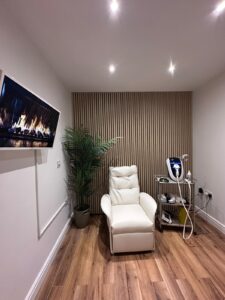
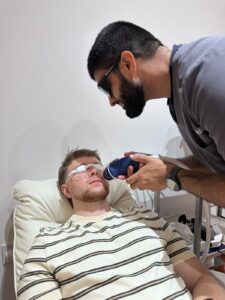
Intense Pulsed Light (IPL) therapy is an advanced treatment that can be particularly helpful for patients with meibomian gland dysfunction and associated eyelid inflammation.
IPL uses carefully controlled pulses of light around the eyelid area. The treatment helps to reduce inflammation and improve the function of the meibomian glands, allowing them to produce healthier oils. This can create a more stable tear film and reduce how quickly tears evaporate from the surface of the eye.
IPL is usually carried out as a course of treatments rather than a one-off procedure. Many patients notice a gradual improvement in symptoms as treatment progresses, particularly when IPL is combined with other dry eye treatments such as heat therapy and meibomian gland expression.
At Cacoullis Opticians, we don’t recommend IPL simply because somebody has dry eyes. We first assess the health of the eyelids, meibomian glands and tear film to understand what is causing the symptoms.
Where IPL is clinically appropriate, it can then form part of a treatment plan tailored to the individual patient and the underlying cause of their dry eye.
Activa Heat Therapy
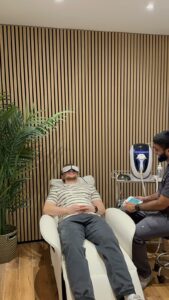
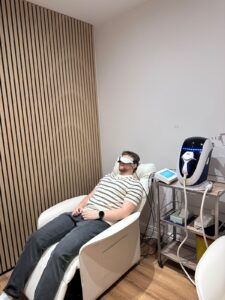
Dry, sore, gritty or watery eyes are often linked to a problem with the tiny oil-producing glands along the eyelids, known as the meibomian glands. These glands produce the oily layer of the tear film, helping to prevent tears from evaporating too quickly.
When the glands become blocked or the oils inside them become too thick, the quality of the tear film can suffer. This is known as Meibomian Gland Dysfunction (MGD) and is one of the most common causes of dry eye.
Activa Heat Therapy is an in-clinic treatment designed to gently warm the eyelids and help soften the oils that have become trapped within the meibomian glands.
Controlled heat is applied to the eyelids, allowing the thickened oils within the glands to become softer and easier to release. The treatment is comfortable and gives us the opportunity to treat the eyelids more thoroughly than is usually possible with a standard warm compress at home.
Meibomian Gland Expression
Following heat therapy, we can gently express the meibomian glands.
This involves applying controlled pressure to the eyelids to encourage the softened oils to flow from the glands. Removing stagnant or thickened oils can help the glands function more effectively and improve the oily layer of the tear film.
Heat therapy and gland expression work particularly well together: the heat softens the oils first, making expression more effective and comfortable.

Prescription Treatments for Dry Eye
Sometimes dry eye needs more than lubricating drops and eyelid treatments.
For patients with persistent or more complex dry eye, prescription-only medicines may be considered as part of their treatment plan. These treatments are generally used when there is significant inflammation, an underlying eyelid condition, or when symptoms have not improved sufficiently with conventional dry eye care.
All of our optometrists are independent prescribers and can issue a private prescription, of which the patient will pay the fee at the pharmacy for any treatment prescribed.
Treatment may include prescription anti-inflammatory eye drops or ointments. In certain cases, oral medication may also be appropriate.
Our aim is not simply to manage the symptoms with more eye drops, but to identify and treat the underlying factors contributing to your dry eye wherever possible.
Blepharoexfoliation Procedure: Nu Lids Pro/BlephEx
Our optometrist will perform a Nu Lids Pro treatment in order to remove the build of debris, scurf and crusting on the eyelid margins. These contribute to inflammatory eye lid disease such as blepharitis, styes and dry eye syndrome. The Nu Lids Pro treatment is comfortable, fast, effective and highly affordable.

Eyelid Debridement
Eyelid debridement refers to a procedure in which the outer layers of the eyelid are gently cleaned or scraped to remove debris, dead skin cells, or other materials that may be contributing to eyelid or eye health problems. This procedure is typically done when there are conditions affecting the eyelid or lash line, such as:
- Blepharitis (inflammation of the eyelid),
- Meibomian gland dysfunction (MGD)
- Chronic dry eye or conjunctivitis.
The goal of eyelid debridement is to help restore the health of the eyelids, improve the function of the meibomian glands, and reduce symptoms of irritation or infection.

Punctal Plugs
Punctal plugs are small devices inserted into the tear ducts (puncta) of the eyes to help treat dry eye disease by blocking the normal drainage of tears. This increases the amount of moisture that stays on the surface of the eye, helping to alleviate symptoms of dryness, irritation, and discomfort. Punctal plugs are typically used in cases where other treatments, such as lubricating eye drops or oral medications, are insufficient.
Punctal plugs are inserted into the small openings at the corner of the eyelids, called puncta, which are the drainage points for tears. Normally, tears drain into the nasal cavity through the puncta. By blocking the puncta with plugs, tear drainage is reduced, and more moisture stays on the eye's surface, improving lubrication and reducing dryness.
Benefits of Punctal Plugs:
- Improved Tear Retention: By blocking tear drainage, punctal plugs help retain more tears, which can be beneficial for people with dry eye disease.
- Less Dependence on Artificial Tears: Punctal plugs can reduce the need for frequent use of lubricating eye drops.
- Quick and Effective Relief: Most people experience relief from dry eye symptoms soon after the plugs are inserted.

Lacrimal Syringing
Lacrimal syringing is a medical procedure used to assess and treat blockages in the lacrimal (tear) drainage system, which consists of the puncta (tiny openings in the eyelids), the lacrimal sac, and the nasolacrimal duct. This procedure involves flushing a sterile fluid through the tear ducts to check for blockages, and it may also be used to clear minor obstructions in the system.
Lacrimal syringing is typically done for patients who present with symptoms such as:
- Excessive tearing or watery eyes (epiphora)
- Recurrent eye infections or conjunctivitis
- Mucus or pus in the corner of the eye
- Chronic eye irritation or discomfort due to poor tear drainage


